About
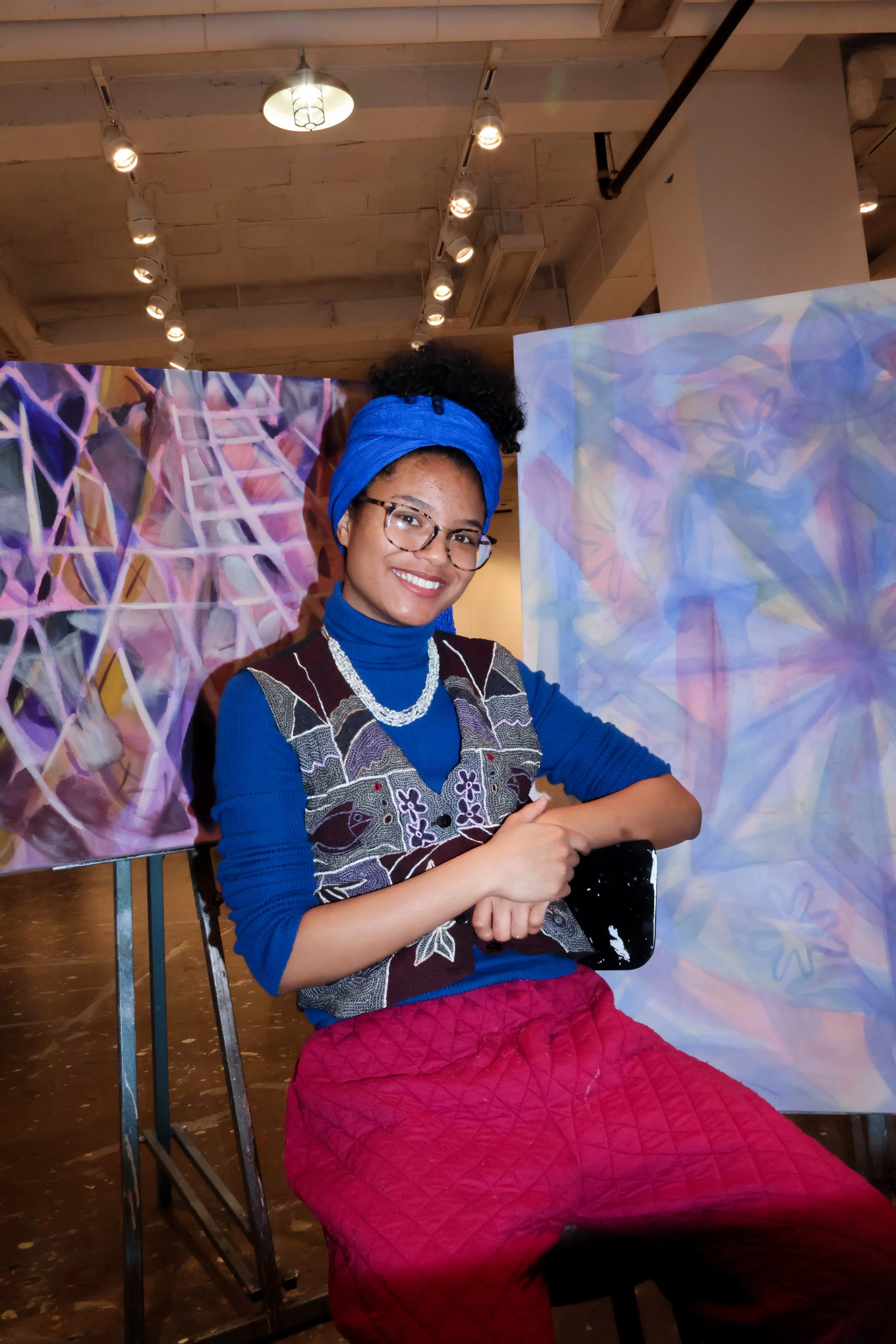
Ani Brutus is an interdisciplinary artist of Haitian-Filipino descent, working across print, paint, textile, and assemblage. Through the layering of found objects and elements from her family archives, she weaves expressions of ancestral spirit into sculptural paintings and suspended fiber totems. Drawing inspiration from the practice of Vodou and the sacred geometry of the natural world, Brutus explores how the divine lives through the discarded. Ani Brutus has trained as a printmaker at the Experimental Printmaking Institute Lafayette College and currently attends the Bachelor of Fine Arts program at CUNY Hunter College. Brutus has participated in group exhibitions with Haiti Cultural Exchange, Studio 45, Blue Print Archives at Moda Curations, Black Girls Sew at the Textile Arts Center, Push-Up Gallery, and Know Your Caribbean at the Caribbean Cultural Center African Diaspora Institute (CCCADI).
Artist Statement
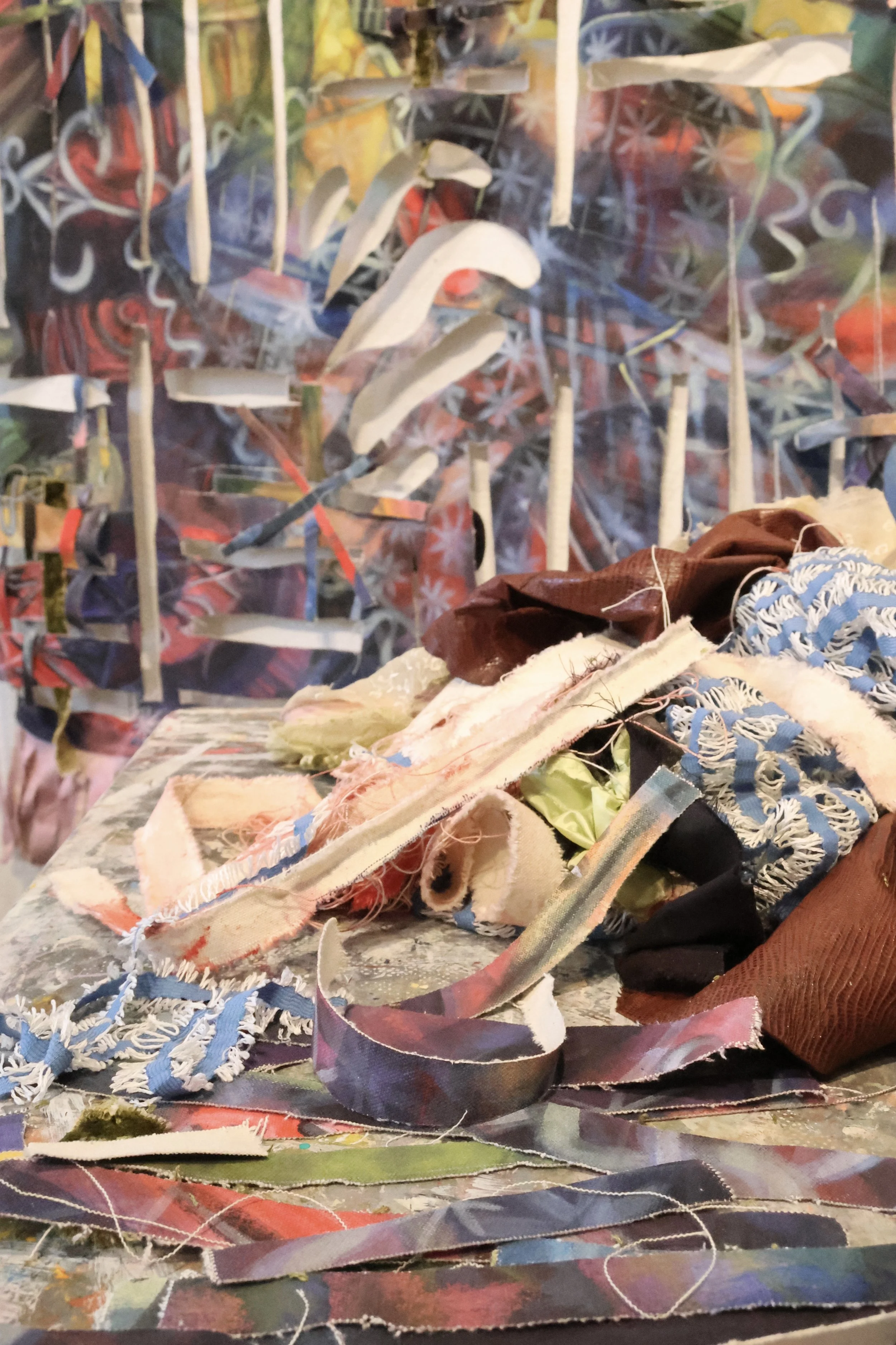
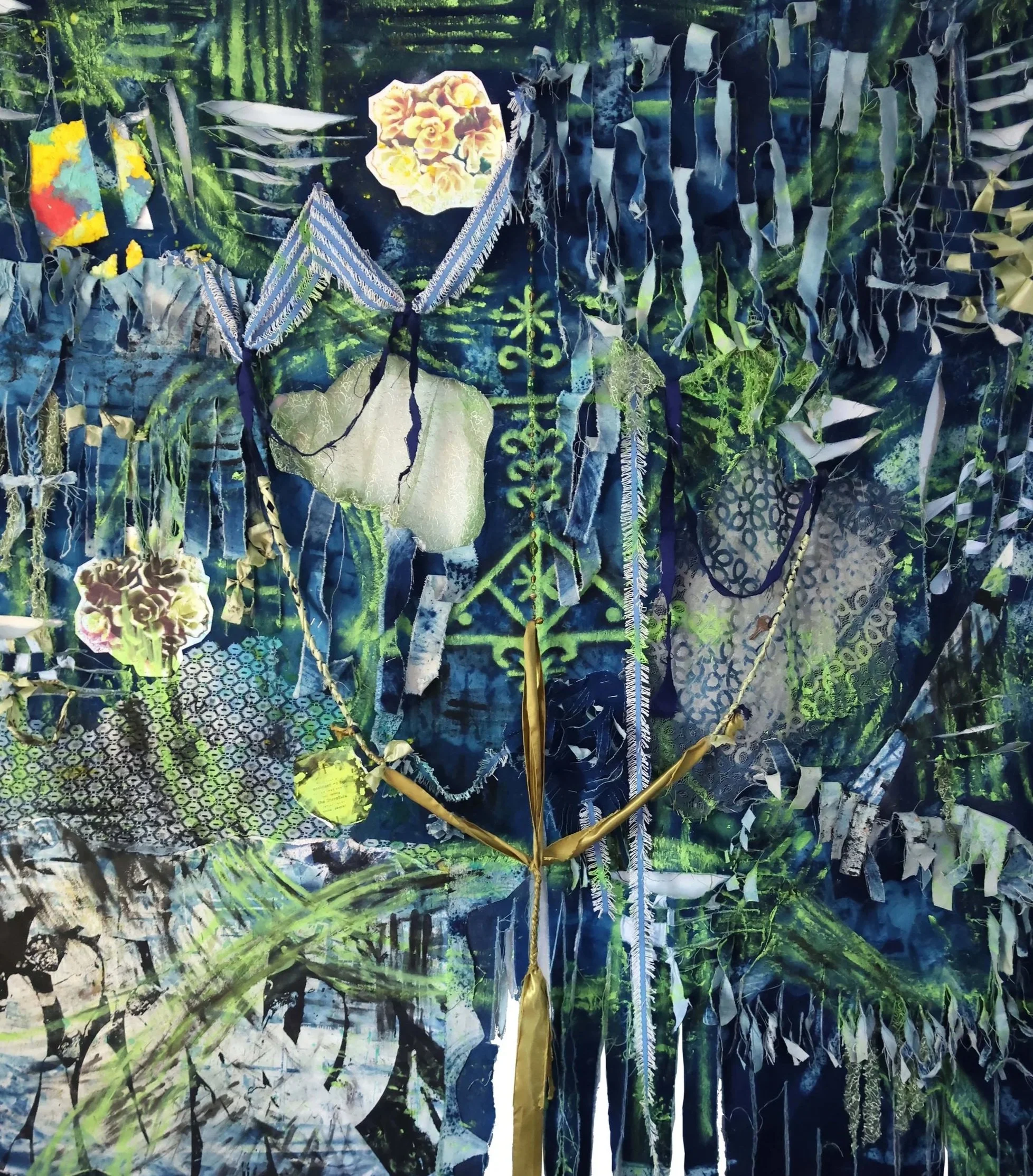
I am drawn to imprints of routine, like the indentations in a seat cushion or the wear of a well-loved hair-clip. In Vodou, spirit inhabits everything—animals, objects, infrastructure and beyond—binding us across time and geography. My practice begins with the engagement of everyday materials and the observation of their forms. At the base of my work, I create textural surfaces through the assemblage of found domestic fabric and discarded commonplace items. I work with items like keys, toothbrushes, old curtains and clothespins. I regard each material as a relic, carrying traces of touch, memory, and connection. Together they form a portrait of my lifestyle. Each assemblage is mounted onto organically-shaped bases that are prone to weathering. I work with foamcore, paper, unstretched canvas and tattered fabrics. My work honors the material from which they came, while reimagining their role through cycles of change.
Layering is central to my practice, both materially and spiritually. I overlay each assemblage with icons of intermediary spirits (lwa), ancestors (anito), images of my upbringing and current day surroundings. As a printmaker, I embrace the element of chance. I work with cyanotype to render dream-like impressions of my family photographs, which I source from physical albums and Facebook archives. Woodcut allows me to engage the grain as a fingerprint, documenting the movement, age, and health of a tree. (We encounter them after they are severed from the root.) Alternatively, I paint acrylic washes in wide and controlled gestures, so figures can veil and emerge through transparency. These layers of tension, between image and texture create a crossroads: a threshold where various decisions and spiritual forces collide.
Sacred geometry–recurring forms that channel ancestral and/or ecological values—are anchoring points for each of my works. Raised in Southeast Jamaica, Queens, I grew up with hearts adorning my iron gates. In 2024, I learned that the “heart” is Sankofa, an Adinkra symbol of the Akan, West Africa. The Adinkra in ironwork maps the displacement of African descendants. The curve of Sankofa embodies the action of reaching back to move forward. This discovery was the catalyst for my journey of ancestral veneration and Vodou. I incorporate Sankofa, other Adinkra symbols like Dwennimmen, and Haitian Veves to channel inherited lessons and welcome the African diaspora to connect with their lineage.
My work explores the coexistence of chaos and clarity at the crossroads. I layer elements of my regional material culture with representations of my ancestors, to embody the crossroads. While crossroads are often viewed as chaotic or occasionally negative–reflecting on the Western desire for linear movement–I understand the crossroad as a constant state of being. My work affirms that spirit never dies, by highlighting how the soul of revolution is alive within the mundane.